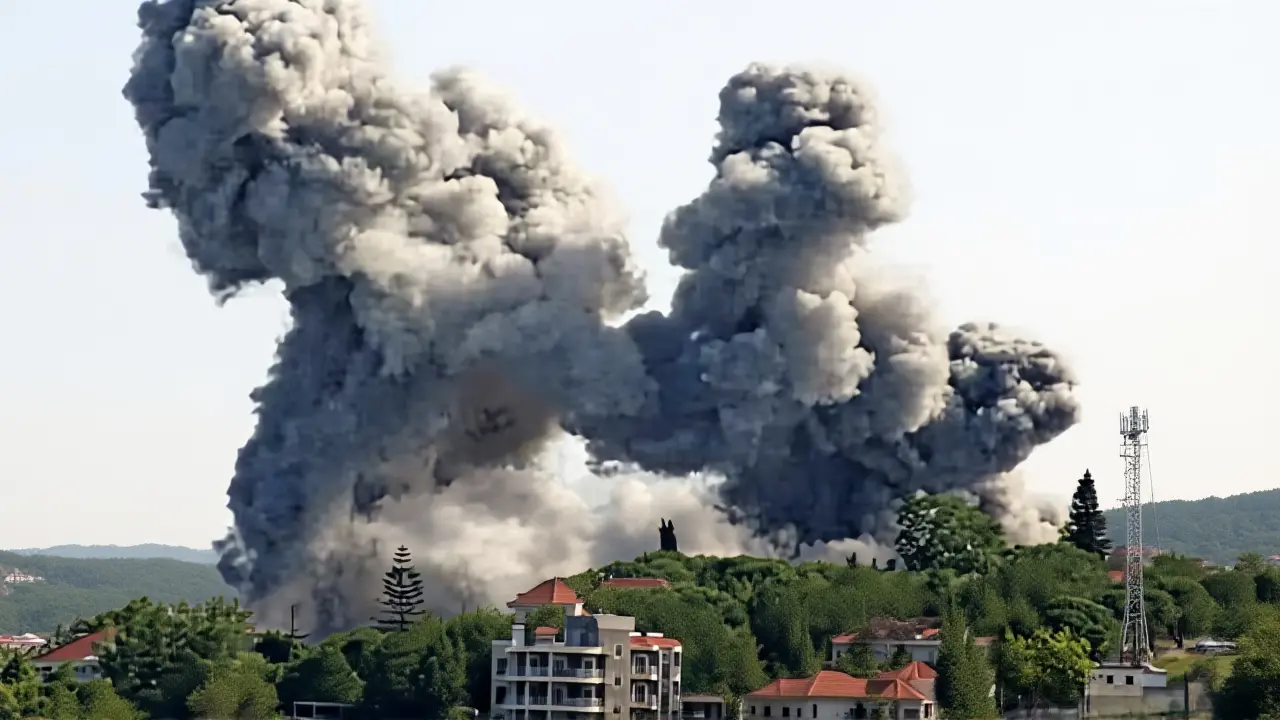
It’s a stark contradiction that has left diplomats scrambling and civilians terrified: despite a formal US-brokered ceasefireLebanon, airstrikes continue to rain down on southern Lebanon. On Sunday, political analyst Scott Lucas, expert commentator appeared on India’s WION (World Is One News) to dissect why the State of Israel is maintaining its military pressure even as peace agreements are nominally in effect. The discussion wasn’t just about geopolitics; it was about the human cost of a truce that seems to exist only on paper.
Here’s the thing: the ceasefire, announced on April 17 and extended through May 17, was supposed to bring relief. Instead, residents in towns like Habush and Tarfce report near-daily strikes. The gap between diplomatic promises and ground reality has never been wider.
The Reality on the Ground
According to reports from WION, the violence hasn’t slowed. In fact, it appears to have intensified in specific pockets. Just one day before recent strikes on villages like Teha and Anita, an Israeli attack on a Palestinian refugee camp in southern Lebanon killed at least 13 people. This single incident marks the deadliest blow since the ceasefire took effect last year.
The destruction is visceral. Witnesses describe thick plumes of smoke rising over neighborhoods in Habush, near Nabatiyeh, where eight people were killed and at least eight more wounded in a strike that flattened an entire residential area. Eyewitnesses claim the bombardment began less than an hour after the Israel Defense Forces (IDF) issued evacuation warnings on social media. It’s a terrifying sequence: a warning, a short window to flee, and then devastation.
The death toll tells a grim story. Since March 2, more than 2,600 people have died in Lebanon. That number keeps climbing, defying the official narrative of de-escalation. In the Sidon district alone, four more people were reported dead in separate strikes, while homes, a convent, and a school were demolished.
Conflicting Narratives
But wait—why is this happening if there’s a ceasefire? Both sides are pointing fingers, and neither is backing down. Israel maintains that these aren’t random attacks but targeted operations against Hezbollah. The IDF released footage claiming to show strikes on weapon storage facilities located “right in the heart of civilian population.” Their argument? Hezbollah is rearming, using civilians as human shields to protect its arsenal.
Lebanon, however, accuses Israel of outright violating the US-mediated agreement. The Lebanese government, citing its National News Agency, argues that the strikes are disproportionate and illegal under the current truce. Meanwhile, observers and humanitarian groups have accused Israel of using widely banned cluster munitions—a charge that adds another layer of international condemnation to the conflict.
On the other side, Hezbollah claims to be striking back. They’ve warned of a “far bigger battle ahead” and stated they’re deploying advanced, unjammable drones against military targets in Israel. It’s a classic escalation ladder, with both sides convinced they’re acting defensively.
Humanitarian Crisis Deepens
The most heartbreaking aspect isn’t the politics—it’s the collateral damage. The International Federation of Red Cross and Red Crescent Societies (IFRC) condemned the targeting of its volunteers, reporting two killed and 18 wounded. These aren’t just statistics; they’re aid workers trying to help amidst the chaos. One volunteer identified as Youssef and another as Hassan were described by colleagues as “members of our families.” When aid workers become casualties, the situation has truly broken down.
Residents across southern Lebanon live in fear. Many areas remain in ruins. The psychological toll is immense, with families unsure whether today will bring silence or sirens. The phrase “near daily air strikes” isn’t just journalistic shorthand; it’s the lived experience for thousands.
Political Pressure Mounts
Internationally, the pressure is building. Former US President Donald Trump recently urged Israeli Prime Minister Benjamin Netanyahu to limit military strikes in Lebanon amid rising tensions. It’s a notable intervention, signaling that even former allies are concerned about the trajectory. Meanwhile, Hezbollah has labeled recent Israel-Lebanon talks a “dead end,” suggesting that diplomatic channels are clogged.
The twist is that the US brokered this ceasefire. Washington’s credibility is now on the line. If the agreement can’t hold, what does that mean for future negotiations in the region? Analysts suggest that without strict enforcement mechanisms, ceasefires in this conflict zone are often treated as pauses, not endpoints.
What’s Next?
As we look ahead, the key question is sustainability. Can either side afford to keep fighting? Israel faces domestic and international pressure to restrain its actions. Hezbollah risks further isolation if it continues cross-border attacks. And Lebanon? It’s caught in the middle, bearing the brunt of the destruction.
Experts warn that without immediate diplomatic breakthroughs, the region could slide into a broader war. The extension of the ceasefire to May 17 offers a narrow window for de-escalation. But given the current pace of strikes, many doubt it will be enough.
Frequently Asked Questions
Why is Israel attacking Lebanon if there is a ceasefire?
Israel states it is targeting Hezbollah infrastructure and weapons caches that it claims are being rebuilt in violation of the spirit of the ceasefire. The IDF argues these strikes are necessary defensive measures against an imminent threat, while Lebanon and international observers argue they constitute a clear breach of the US-brokered agreement announced on April 17.
How many people have died in Lebanon since March 2?
According to WION reports citing local sources, the death toll in Lebanon has climbed past 2,600 since March 2. This includes casualties from various strikes in southern Lebanon, including incidents in Habush, Sidon, and a Palestinian refugee camp where at least 13 people were killed in a single attack.
What role did the United States play in this conflict?
The United States brokered the ceasefire agreement that was announced on April 17 and extended to May 17. However, the continued violence has raised questions about the effectiveness of US mediation. Former President Donald Trump has also publicly urged Israeli Prime Minister Benjamin Netanyahu to limit strikes, highlighting ongoing US political interest in the region.
Has anyone from humanitarian organizations been harmed?
Yes. The International Federation of Red Cross and Red Crescent Societies (IFRC) reported that two of its volunteers were killed and 18 were wounded in Israeli strikes. The IFRC condemned these incidents, emphasizing the danger faced by aid workers who are essential for providing medical care and support to affected communities.
What is Hezbollah’s response to the Israeli strikes?
Hezbollah claims to be retaliating by striking military targets in Israel using advanced, unjammable drones. They have warned of a “far bigger battle ahead” and dismissed recent diplomatic talks as a “dead end,” indicating a willingness to escalate the conflict rather than de-escalate under the current terms.