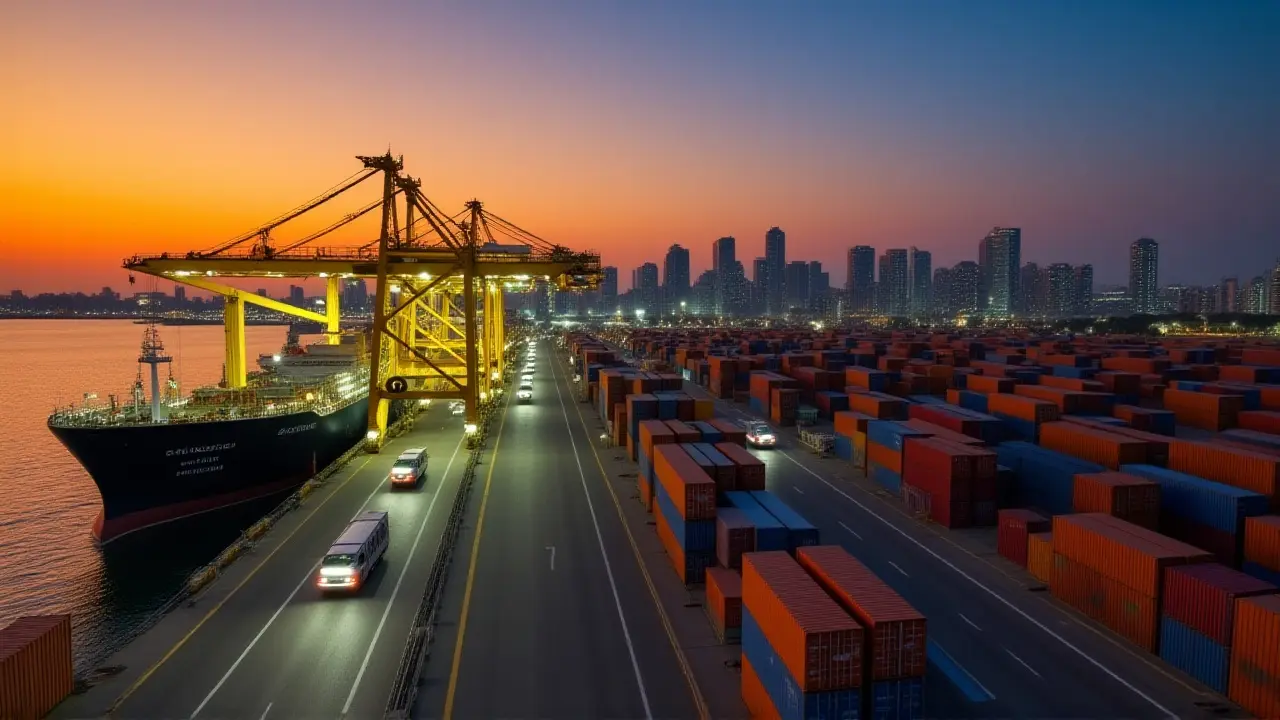
It turns out the worst-case scenario for Nigeria’s economy isn’t coming true after all. The Nigerian Export Promotion Council just confirmed that the country shattered its own records this year, pushing non-oil exports to a staggering $6.1 billion. That’s an 11.5 percent jump from last year’s figures, signaling a serious shift away from relying solely on crude oil.
When Nonye Ayeni, Executive Director at NEPC, briefed stakeholders earlier this month, the mood wasn’t just optimistic—it was vindicated. After decades of policy talk about “economic diversification,” the actual receipts have finally caught up with the ambition. The export basket now covers 281 different products shipped to 120 countries. It’s not just about sending raw materials out anymore; processed goods are finally getting their day in the sun.
The Numbers Behind the Surge
Here’s the thing most people overlook: the volume isn’t the only story. While the value hit $6.1 billion, the physical weight of those exports also grew. We’re looking at 8.02 million metric tonnes moved across borders. To put that in perspective, imagine stacking trucks full of goods end-to-end from Lagos all the way to Kano twice over. That kind of logistics movement requires roads, ports, and documentation systems that actually work.
Bola Ahmed Tinubu, President of Nigeria has been pushing his Renewed Hope Agenda hard since taking office. The data suggests the policies are landing. Documentation processes tightened, meaning fewer exporters get rejected at customs due to paperwork errors. It sounds boring, but clearing bureaucracy quickly is often the difference between a profit and a spoiled shipment.
Cocoa King and Global Partners
If you want to know what’s actually leaving the docks, look at the cocoa plants. Cocoa beans and derivatives alone brought in nearly $2 billion. That single commodity line dominates the revenue chart. But it’s not just chocolate ingredients. Cashew nuts, sesame seeds, urea, and even gold doré are moving in significant quantities. Miners are finally shipping aluminium and copper ingots rather than selling the ore cheaply at the gate.
Geographically, the map looks familiar but with some interesting twists. The top destination remains The Netherlands. They took 17.53 percent of all exports. That makes sense given its role as Europe’s main port hub. Brazil and India rounded out the top three markets. Exports to the Netherlands actually surged 32.46 percent. Meanwhile, regional sales to ECOWAS neighbors dropped slightly. Why? Because three member states withdrew recently. It’s a complex geopolitical ripple effect affecting trade blocks.
Policy Drivers and Regional Shifts
The drop in sales to neighboring West African nations follows the exit of Burkina Faso, Mali, and Niger from ECOWAS. It creates friction where there used to be open borders. However, Ayeni pointed out that the AfCFTA (African Continental Free Trade Area) remains the bigger prize. If Nigeria can leverage continental access rather than just regional blocs, the recovery could be even more robust.
There’s a real risk in celebrating too early, though. Inflation in the home market can eat into these gains. But for the balance of payments, this is critical. Foreign exchange earnings from non-oil sectors help stabilize the currency. When traders earn dollars legally through cocoa or cashew instead of smuggling, it strengthens the official naira rate.

What Comes Next for Nigerian Trade
Looking ahead to 2026, the council expects momentum to hold if infrastructure keeps improving. Port congestion in Apapa and Onne still causes delays that cost farmers money. Solving that logistical bottleneck would unlock another layer of potential growth. The current success proves the agricultural and mineral sectors have teeth.
But wait, one detail is still fuzzy in the reports. Some mid-year figures cited values in trillions of naira alongside dollar amounts, causing confusion on exact conversion rates. Regardless of the currency fluctuation, the trend line is pointing up. For a nation historically defined by its oil patches, building a reputation on its farms and mines might just be the long-term survival strategy everyone hoped for.
Frequently Asked Questions
How does this affect ordinary Nigerians?
Increased non-oil exports directly boost foreign exchange earnings, which helps stabilize the Naira and reduce inflation. Farmers and miners also receive better prices due to higher global demand for Nigerian produce.
Why did exports to ECOWAS decline?
Exports to the Economic Community of West African States saw a dip because three major member states—Burkina Faso, Mali, and Niger—formally exited the bloc, disrupting established regional trade routes.
Which products are driving the growth?
Cocoa beans and derivatives generated almost $2 billion alone. Other high-value exports include sesame seeds, cashews, urea, gold doré, and processed mineral products like aluminium ingots.
Is the NEPC confident about 2026?
Yes, despite challenges. The council highlights that improved documentation and the implementation of AfCFTA agreements provide a strong foundation for continued growth next year.
16 Comments
Sara Lohmaier March 27, 2026 AT 03:39
I think this is genuinely exciting news for the continent when we see such concrete progress being made. The shift away from oil dependency has been a topic of conversation for decades without much tangible result. Seeing actual numbers like six billion dollars attached to agriculture and minerals gives real weight to the policy discussions. We should celebrate these wins while continuing to push for logistical improvements in the ports. Infrastructure remains the next critical bottleneck for unlocking even more potential here.
Sara Lohmaier March 27, 2026 AT 03:43
This is probably just a temporary spike caused by favorable currency exchange rates rather than genuine structural growth. Every economy has its boom cycles and people tend to confuse luck with policy success. The bureaucracy will likely find new ways to choke off this momentum soon enough unless we are careful. It feels suspicious how quickly these numbers jumped after the leadership change.
Sara Lohmaier March 28, 2026 AT 15:39
Sure lets hope inflation doesnt eat all that profit before anyone notices.
Sara Lohmaier March 29, 2026 AT 20:59
I read teh news abot it too but i think thye shouls focus on roods first. Exports cant go far wuthout good transport systems and port delays. Its really great tho that cocoa is bringing in so muvh money for farmers who strugle daily. Maybe next year they fix the customs office paperwork that slows us down.
Sara Lohmaier March 30, 2026 AT 04:50
One must observe that statistical anomalies often precede market corrections in emerging economies. The optimism displayed here is somewhat premature given the volatility of global commodity prices. We shall wait until the fiscal year concludes before drawing definitive conclusions regarding sustainability.
Sara Lohmaier March 31, 2026 AT 15:18
That is a very fair point about the timing of these releases but I still think we have reason to be hopeful today. The fact that processed goods are finally moving suggests value addition is happening locally. It means jobs are being created beyond just raw extraction which benefits families directly. We need to maintain this positive dialogue without being blinded to risks though.
Sara Lohmaier April 1, 2026 AT 16:38
The ethical implications of relying solely on export revenue are profound and cannot be ignored!!! We must ensure that our wealth is distributed fairly among the populace,,,, otherwise it serves no purpose. The corruption scandals of the past era still cast a long shadow over current successes!!! It is imperative that transparency accompanies these financial gains!!!!
Sara Lohmaier April 2, 2026 AT 01:58
Nigeria needs to stop depending on foreign validation to feel successful because true sovereignty comes from self-reliance first. Import substitution is the only way to build a resilient economy that does not crumble when Western markets tighten their belts. We sell our resources cheaply and buy finished goods back expensive which is a lose strategy. Regional trade blocks are weak without enforcement mechanisms that actually work against smuggling.
Sara Lohmaier April 4, 2026 AT 01:21
That is a very spicy take on things but I get where you are coming from buddy. Trade barriers are annoying for sure but opening up brings in tech transfers eventually. Imagine the cool gadgets we could build if we processed our own alminum ore locally. Maybe the gov can invest more in vocational schools to train workers for that kind of factory work soon.
Sara Lohmaier April 5, 2026 AT 00:31
Relax everyone because the market will sort itself out regardless of our anxiety levels here. History shows us that panic selling or doom mongering rarely changes macroeconomic trends in the long run. Just sit back and watch the quarterly reports roll in over the next few months. It is going to be interesting to see if the trend holds through the rainy season disruptions.
Sara Lohmaier April 6, 2026 AT 12:56
👀🔥 So many opportunities ahead but also lots of challenges to navigate 🛣️💸
Sara Lohmaier April 7, 2026 AT 05:32
The figures released by the council seem to follow a pattern seen right before major economic adjustments occur globally. People are not talking enough about how currency valuation tricks can inflate dollar amounts artificially. Someone is definitely controlling the narrative to distract from deeper internal issues regarding debt repayment schedules.
Sara Lohmaier April 8, 2026 AT 08:43
You seem to lack the fundamental understanding of international finance principles required to critique this data properly. Ordinary citizens rarely grasp the nuances of balance of payments optimization strategies employed by central banks. Your skepticism borders on naive populism rather than analytical rigor derived from professional experience.
Sara Lohmaier April 8, 2026 AT 22:45
Just happy to see my neighbors getting paid better for their harvest this season honestly. Everyone talks about big economics but small business owners seeing green makes the biggest difference. Hopefully the fuel subsidies stabilize too so costs do not rise further for transport.
Sara Lohmaier April 10, 2026 AT 04:15
We are seeing significant headway in aggregate supply chain efficiency metrics driven by the recent policy pivot. However, liquidity ratios remain tight and capex requirements for logistics infrastructure are substantial. Fiscal consolidation strategies must align with monetary easing policies to sustain this export velocity.
Sara Lohmaier April 10, 2026 AT 19:49
The economic indicators presented suggest a robust structural transformation that warrants serious academic attention in future studies. First, we observe a clear decoupling of national revenue streams from volatile hydrocarbon pricing mechanisms in the global marketplace. Second, the diversification into agricultural commodities demonstrates resilience against seasonal weather variability patterns. Third, the increase in physical tonnage indicates improved productivity per unit of cultivated land area. Fourth, the geographic distribution of export markets reveals a strategic reduction in single-point dependency risks. Fifth, the inclusion of semi-processed goods adds significantly higher value retention within domestic manufacturing sectors. Sixth, the regulatory environment appears to have become more predictable for foreign direct investment purposes. Seventh, the logistics bottlenecks mentioned indicate areas requiring urgent public sector intervention immediately. Eighth, the geopolitical shifts in West Africa necessitate a recalibration of regional trade partnership agreements. Ninth, the stability of the local currency depends heavily on sustained earnings from these new sources. Tenth, inflationary pressures must be monitored closely to ensure purchasing power parity improves for local consumers. Eleventh, human capital development through technical skills training is essential to maintain quality standards for global buyers. Twelfth, digital documentation systems reduce administrative costs and minimize opportunities for bureaucratic corruption significantly. Thirteenth, long-term planning horizons should extend beyond typical electoral cycles to ensure continuity of reform agendas. Fourteenth, sustainable resource management practices must be enforced to prevent environmental degradation during mining expansion phases. Fifteenth, international community support through trade facilitation agreements will accelerate the transition speed towards a post-oil economic model.