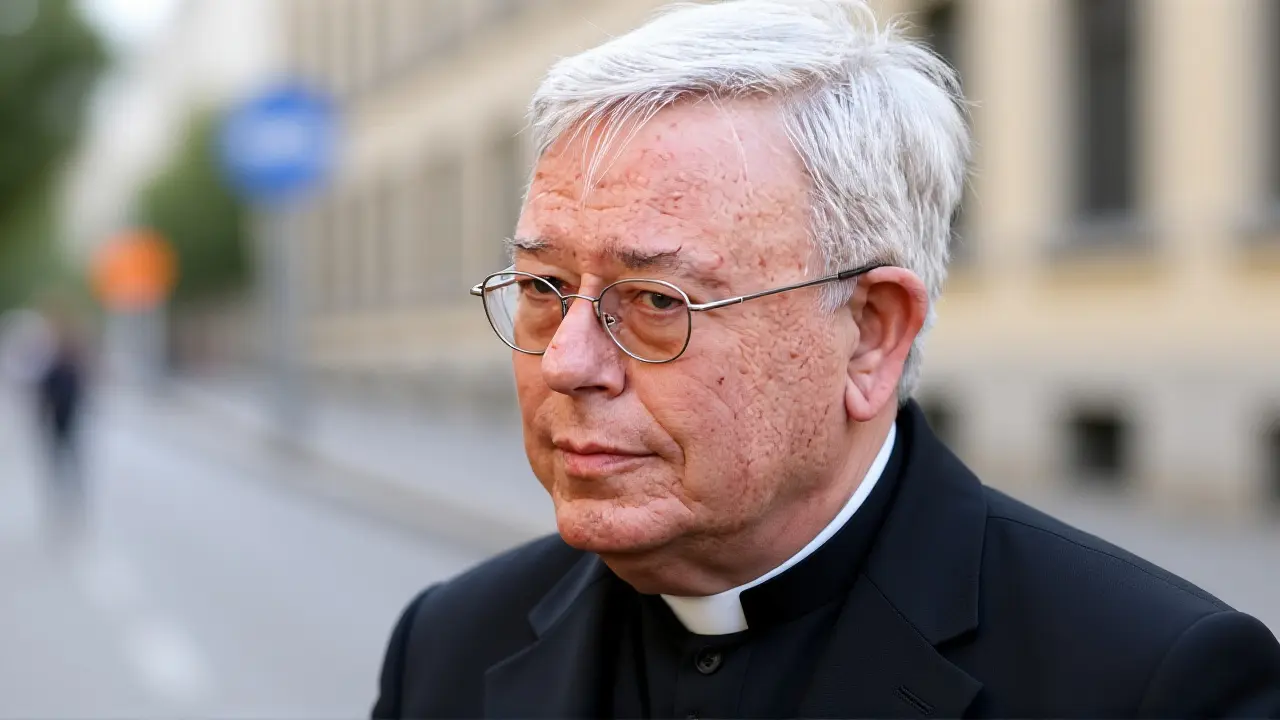
The Synod on Synodality has just released a document that could fundamentally shift how the Catholic Church views its leadership. On March 10, 2026, the General Secretariat of the Synod published the Final Report of Study Group No. 5, focusing specifically on women's participation in the life and leadership of the Church. Jean-Claude Hollerich, General Relator of the Synod, didn't mince words, calling the publication "an important step forward" and insisting that "big steps are being taken" to redefine the role of women in the ecclesial structure.
Here's the thing: this isn't just another theological paper gathering dust in a Vatican archive. It's a comprehensive attempt to reconcile ancient traditions with a modern world where women are leading in every other professional sphere. The report acknowledges a tension between Gospel values and the "cultural order," suggesting that in many regions, local customs—rather than faith—have been the primary barrier to women's advancement. (And let's be honest, that's a polite way of saying the Church is grappling with deep-seated patriarchy).
The push for change is being led by high-ranking officials who realize that the status quo is no longer sustainable. Mario Grech, the Secretary General of the Synod, pointed out that the mission now is to make the Church a force that promotes respect for the rights of all. He mentioned that this transition requires "courage, accompaniment, and patience," emphasizing that changes must be gradual to avoid splitting the global community.
Inside the Study Group No. 5 Findings
The report is split into three distinct parts, moving from the "how" to the "what" and finally to the "evidence." The first section is mostly a procedural reconstruction of how Study Group No. 5 operated. But the second part is where it gets interesting. It uses a "bottom-up" approach, synthesizing testimonies from women who already hold positions of responsibility within the Church. Instead of top-down decrees, the Synod listened to what women are actually doing on the ground to discern the "inspiration of the Holy Spirit."
A few key takeaways from the findings include:
- The "question of women" is described as a "sign of the times," meaning it's a contemporary reality the Church cannot ignore.
- A shift toward a "relational approach," focusing on the charismatic contributions women bring to ecclesial life.
- A direct analysis of the governance models set by Pope Francis and Pope Leo XIV, both of whom have appointed women to leadership roles within the Roman Curia.
Turns out, the report isn't just looking forward; it's looking back. The third section is a massive appendix that catalogs everything from female figures in the Old and New Testaments to a critical look at the "Marian Principle" versus the "Petrine Principle" (essentially comparing the leadership style of Mary to that of St. Peter). It's a theological attempt to create a framework where leadership isn't just about the power to command, but the power to serve.
The Hollerich Factor: A Catalyst for Change?
It's impossible to discuss this report without talking about Cardinal Hollerich. A Jesuit with a reputation for pushing boundaries, Hollerich views synodality as an "unstoppable and transformative process." He has long been a voice for the progressive wing of the Church, and his involvement suggests the report is a stepping stone toward more radical changes.
Interestingly, Hollerich has previously shaken the foundations of traditional doctrine. Back in 2024, when asked if the ban on women's ordination was an infallible truth, he suggested it could be changed, noting that it simply "needs arguments and time." This is a stark departure from the rigid stance taken by Pope St. John Paul II. He's also been an outspoken supporter of blessing same-sex unions, even though the Congregation for the Doctrine of the Faith issued a strict 2021 ruling against it.
Different Speeds, Different Realities
One of the most realistic admissions in the report is that the Church moves at "different speeds." While a parish in Germany or the United States might be ready for women to hold significant administrative power, other regions in the global south may find such moves culturally jarring. This "varying pace" is the tightrope the Vatican is walking: trying to evolve without triggering a full-scale schism.
The broader implication is clear. The Church is moving away from a model where leadership is strictly tied to the priesthood. By highlighting "ecclesial potestas" (Church power) as something that can be shared and distributed, the Synod is effectively widening the door for women to enter the halls of power in Vatican City and beyond.
What Happens Now?
The publication of the report is a milestone, but it isn't a law. The next step will likely be the implementation of these findings into canon law or specific diocesan guidelines. Watch for more appointments of women to heads of Dicasteries and a possible shift in how the Church defines "governance" versus "sacramental power."
For now, the report serves as a roadmap. It provides the theological and historical justification for change, meaning that when the "big steps" finally happen, the Church can claim they were guided by both tradition and the Holy Spirit.
Frequently Asked Questions
Does this report mean women will be ordained as priests?
Not immediately. While Cardinal Hollerich has suggested that the ban on women's ordination could eventually change with "arguments and time," the report focuses on "leadership and participation" in governance rather than sacramental ordination. It opens the door for theological discussion but does not change current law.
What is the difference between the Marian and Petrine Principles?
The Petrine Principle refers to the traditional, hierarchical authority associated with St. Peter (the Pope). The Marian Principle emphasizes a leadership style based on listening, openness, and accompaniment, modeled after the Virgin Mary. The report suggests integrating both to create a more inclusive leadership structure.
Why does Cardinal Grech mention "cultural order"?
Cardinal Grech is acknowledging that in many parts of the world, local cultural prejudices against women are often mistaken for religious teachings. By distinguishing between "Gospel values" and "cultural aspects," he is arguing that the Church can promote women's rights without betraying its faith.
Who are the primary figures influencing these changes?
The main drivers are Pope Francis and Pope Leo XIV, who have already begun appointing women to the Roman Curia. Cardinal Jean-Claude Hollerich and Cardinal Mario Grech are the key administrative figures managing the synodal process and synthesizing the research into actionable reports.