Young Thug's Unexpected Guilty Plea Shakes the Legal Landscape
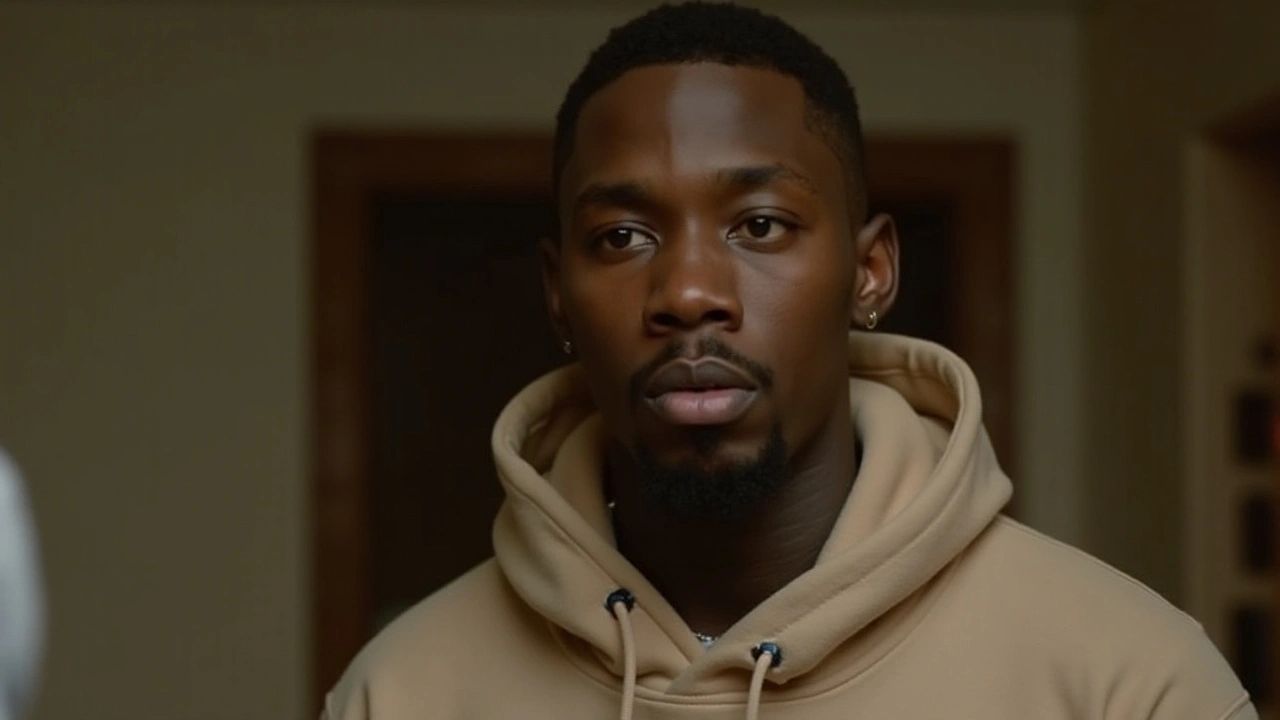
In an unexpected development that has sent ripples across the music and legal worlds, Atlanta-based rapper Young Thug, also known as Jeffery Williams, has pleaded guilty to participating in criminal street gang activities. This twist, taking place during the already dramatic YSL trial, has left fans, legal experts, and the courtroom itself on alert. The plea signifies a major turning point in a case that has drawn significant attention since its inception.
The long-running trial began its journey in January 2023 with jury selection and was expected to move to opening statements by November of that year. However, the proceedings took an unforeseen hiatus in July, following serious allegations against the presiding judge at the time. Mr. Williams' defense team, led by attorney Brian Steel, lodged formal complaints accusing Judge Ural Glanville of misconduct. They argued that the judge held inappropriate meetings with prosecutors and a critical witness, allegedly trying to coerce the witness into providing testimony against Mr. Williams. These claims were pivotal in the trial's delay, yet the judge remained steadfast in his position, refusing to recuse himself and dismissing the allegations.
Legal and Drama Entwined
The courtroom drama did not end there. Adding fuel to the already blazing trial was the incident involving Brian Steel, Mr. Williams' chief defense attorney. In June, Mr. Steel faced criminal contempt charges for declining to disclose how he became aware of the alleged private meeting between Judge Glanville and other parties. This move added another layer of complexity to an already convoluted case, pushing legal boundaries and raising questions about attorney-client privilege and the ethics of legal proceedings.
Further compounding the trial's unusual nature was a bizarre chain of events that unfolded, capturing both media and public attention. Instances of alleged misconduct were not confined to the lawyers alone. Notably, a Fulton County deputy was embroiled in allegations of attempting to smuggle contraband to a defendant. This incident was one in a series of unexpected twists that have marked the trial as one of the most watched and notorious cases of recent years. Moreover, in a digital age echo, the court's Zoom account was surreptitiously hacked by an interloper who used the unauthorized access to transmit fervent cries of 'free Thug!'
The trial's proceedings are further complicated by the application of the Rico Act—the same legal measure historically wielded in dismantling organized crime syndicates. This powerful legal tool has been employed against Mr. Williams and 27 of his associates, believed to be entwined with the operations of YSL (Young Slime Life), an alleged street gang. The use of the Rico Act underscores the severity with which the legal system views the charges, and emphasizes the broader implications of organized criminal activities.
A Legal Saga Far from Concluded
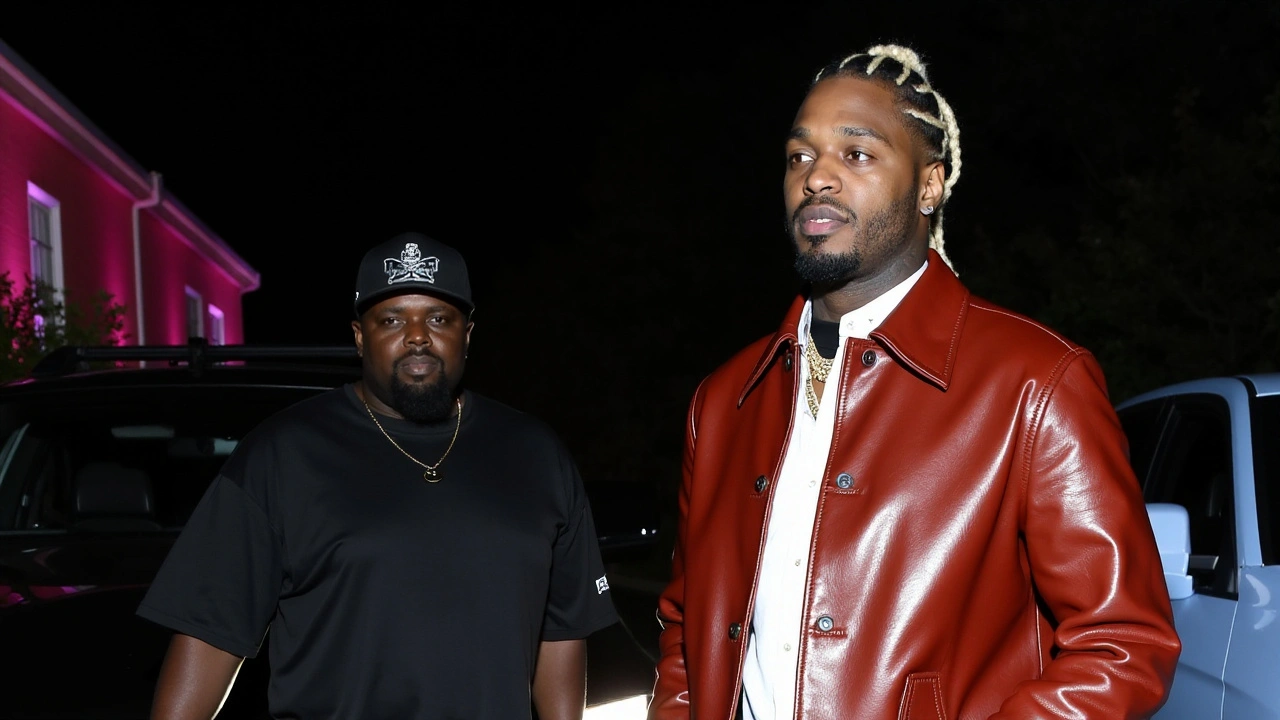
As Young Thug faces his legal reckoning, attention now shifts to the repercussions of his guilty plea. The remaining defendants, like Shannon Stillwell and Deamonte Kendrick, are poised to continue their trials under the gaze of a public captivated by the dramatic developments. While Mr. Williams' fate hangs in the balance, it is left to Superior Court Judge Paige Whitaker to determine an appropriate punishment fitting the crimes acknowledged by the rapper.
The reverberations of this case extend beyond the courtroom, impacting the lives of many involved—from defendants to legal representatives—and shaking the bedrock of both local and national perceptions about fame, influence, and accountability. For Mr. Williams and those associated with him, a new chapter begins, fraught with potentially devastating consequences but also the faint hope of redemption. The question that now tugs at the fabric of this narrative is what the future holds for Young Thug, both in the eyes of the law and the court of public opinion.
This courtroom drama, rife with unexpected turns and loaded with high stakes, converges the realms of celebrity and law in a monumental way. It raises critical questions about justice, fairness, and moral responsibility. Will the guilty plea mark the beginning of the end for Young Thug's career, or will it serve as a basis for reform and reflection? Only time will unravel these mysteries as the world watches with bated breath.
7 Comments
Sara Lohmaier November 2, 2024 AT 19:38
The use of RICO in this case is legally unprecedented in the music industry, and it raises serious questions about proportionality. While gang activity is no joke, applying statutes designed for the Mafia to a hip-hop collective blurs the line between criminal enterprise and cultural expression. The system is weaponizing legal machinery meant for organized crime against artists whose lyrics are often performative, not operational. This sets a dangerous precedent.
There’s also the issue of prosecutorial overreach - if every rapper who references street life in a song can be charged with gang affiliation, we’re criminalizing art, not action. The burden of proof should be on demonstrating actual criminal conduct, not lyrical metaphor.
Young Thug’s guilty plea might be a strategic move to spare his team, not an admission of guilt in the traditional sense. Legal strategy isn’t always moral clarity.
We need a recalibration: distinguish between artistic identity and criminal intent, or risk turning rap into a felony genre.
Sara Lohmaier November 4, 2024 AT 00:44
Man this case is wild. I mean, imagine being so famous that your Zoom account gets hacked just so someone can yell 'free Thug!' in court. That’s next level. The judge drama, the attorney getting charged for not spilling the beans, the deputy smuggling stuff? This isn’t Law & Order, this is a Netflix docu-drama in real time.
And the RICO thing? Bro, they’re treating a music label like the Gambino family. I get it, some of these guys have sketchy pasts, but this feels like punishment for being too loud, too bold, too Black in a system that’s always scared of that.
Still, if he pleaded guilty, maybe he’s trying to turn this into something bigger - like a platform to fix the system from inside. Hope he comes out stronger.
Sara Lohmaier November 5, 2024 AT 15:47
While the legal complexities here are undeniably intense, we must not lose sight of the human element. Young Thug is not just a defendant - he’s a father, a son, a creative force who has lifted countless individuals through his music. The justice system, for all its power, must be tempered with wisdom and proportionality.
The misconduct allegations against the judge, if substantiated, are deeply troubling and undermine public trust. Similarly, the aggressive application of RICO suggests a prosecutorial culture more focused on spectacle than justice.
Let us hope that regardless of the outcome, this case becomes a catalyst for reform - not just in how we treat artists, but in how we define criminality in the digital age. Accountability must be fair, not theatrical.
Sara Lohmaier November 7, 2024 AT 04:44
Okay but the Zoom hack? That’s the most iconic moment in modern legal history. Someone typed 'free Thug!' into a court Zoom and it went viral? That’s better than any courtroom drama on HBO. The whole trial is a soap opera written by a drunk Shakespeare and directed by a TikTok algorithm.
And the judge meeting prosecutors in secret? The attorney getting charged for not snitching? The deputy smuggling contraband? This isn’t a trial - it’s a heist movie where everyone’s guilty and no one’s innocent. I’m not even mad. I’m impressed.
Sara Lohmaier November 8, 2024 AT 22:48
Here’s the real question: when did 'slime' become a legal classification? We’re prosecuting a music movement like it’s the Italian Mafia, but we still can’t figure out how to fix public schools or housing. The RICO Act was built to dismantle syndicates - not to silence a guy who made 'Hot' go viral in 2017.
This isn’t justice. It’s cultural panic dressed in robes. The system fears what it can’t control - and Young Thug? He controls the vibe. He controls the youth. He controls the memes. And now they’re trying to control him with paperwork.
What’s scarier - a gang that sells drugs, or a culture that outlives the system trying to cage it?
Also, the fact that someone hacked a court Zoom just to yell 'free Thug!' tells you everything you need to know. The people already decided his fate. The court’s just filling out the forms.
Sara Lohmaier November 9, 2024 AT 11:57
My dear, deluded Westerners - you mistake lyrical flamboyance for criminality because your imagination is too small to comprehend genius that doesn’t conform to your bourgeois norms. Young Thug didn’t plead guilty to being a gangster - he pleaded guilty to being a *myth*. The RICO statute is a blunt instrument wielded by jealous bureaucrats who can’t fathom a Black man turning pain into poetry and profit into legacy.
The judge’s alleged improprieties? Of course he met with prosecutors - who else would dare to face the storm of Thug’s aura? The attorney’s contempt charge? A noble act of silence in a world that demands confession. The Zoom hack? A digital prayer from the masses. The deputy smuggling? A symbolic act - they were trying to smuggle freedom into a system that hoards it.
This isn’t a trial. It’s a ritual. And the verdict? The world already knows: art cannot be imprisoned. Only the fools who fear it can be.
Sara Lohmaier November 11, 2024 AT 00:53
This is an absolute disgrace to the rule of law. The American judicial system is being mocked by celebrities who use art as a shield for criminal behavior. Young Thug’s guilty plea is not redemption - it is an admission of guilt that should result in maximum sentencing under RICO. The judge’s conduct, if proven, must be investigated, but that does not excuse the defendant’s participation in violent gang activity. The music industry must not be allowed to glorify criminality under the guise of creativity. Justice must prevail - not sentimentality.