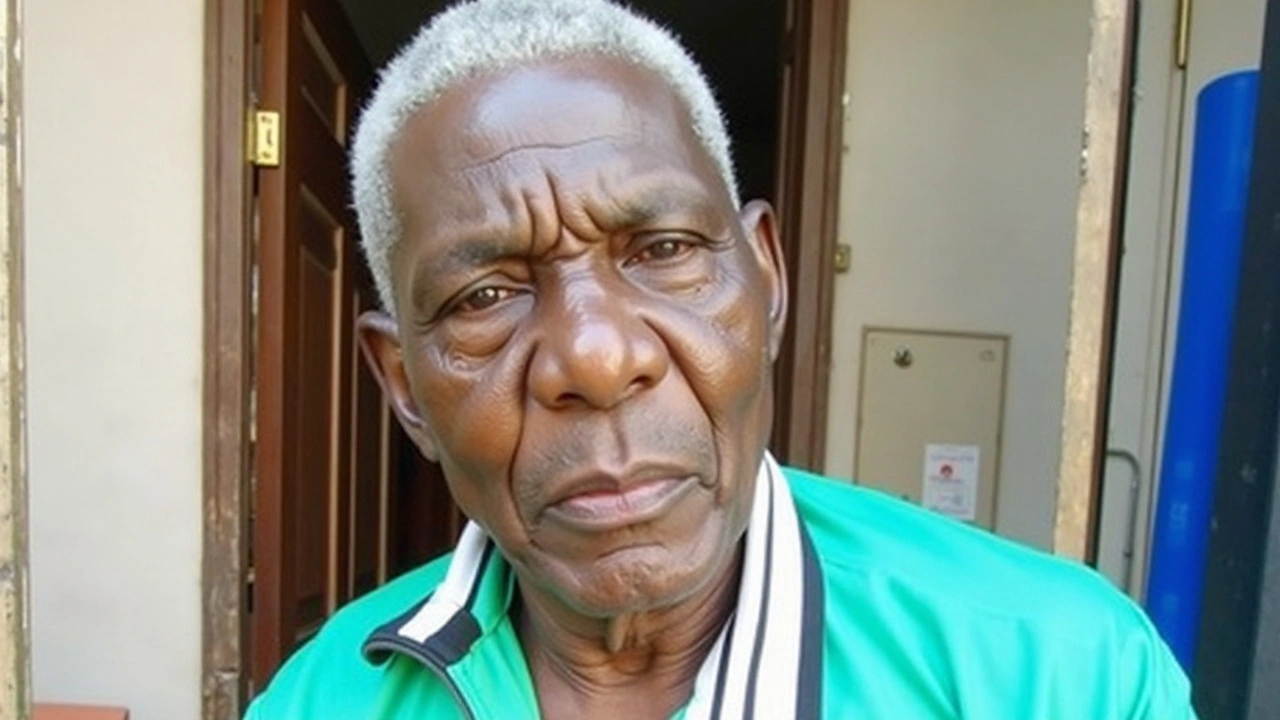
The Life and Times of Peter Fregene: A Football Legacy
The name Peter Fregene resonates with fond memories for many football enthusiasts in Nigeria and beyond. Known as the 'Flying Cat' for his extraordinary agility on the field, Fregene was more than just a goalkeeper; he was an emblem of excellence in Nigerian sports. With his recent passing at the age of 77, the football community reflects on a life well-lived and a career that left a mark on the international stage. Fregene's journey into the world of football began in an era when the sport was gaining momentum in Nigeria, and he quickly rose to prominence. His most notable stint came as the first-choice goalkeeper for the Nigerian national team, the Green Eagles, from 1968 to 1971. During this period, his prowess on the field was unmatched, earning him accolades and paving the way for future generations of Nigerian footballers.
A Career Spanning Over Two Decades
Peter Fregene's career was nothing short of iconic. His passion for football was palpable, and his dedication saw him represent Nigeria at the 1968 Olympics in Mexico. This international exposure put Nigeria on the map, highlighting the country's potential in producing world-class athletes. Fregene's legacy was further solidified when he was recalled to the national team for the 1982 African Cup of Nations finals, demonstrating his enduring skill and value to the team even after many years. In domestic football, Fregene's contributions were equally significant. He played a pivotal role for both ECN and Stationery Stores, leading them to several victories, including the prestigious Nigerian FA Cup. These achievements made him a household name and a beloved figure in Nigerian sports.
The Man Behind the Legend
Beyond his football career, Peter Fregene was a man of character and integrity. His humility and sense of gratitude were qualities that endeared him to fans and friends alike. Despite his achievements, he remained grounded and always expressed appreciation for those who supported him throughout his life. This was particularly evident during the later years of his life when he battled illness. With the support of his loving wife Tina and their children, along with close friends like Segun Odegbami, Fregene faced his health challenges with courage and strength. Odegbami’s heartfelt tribute on Facebook emphasizes the impact Fregene had on those around him and the void his passing leaves in many hearts.
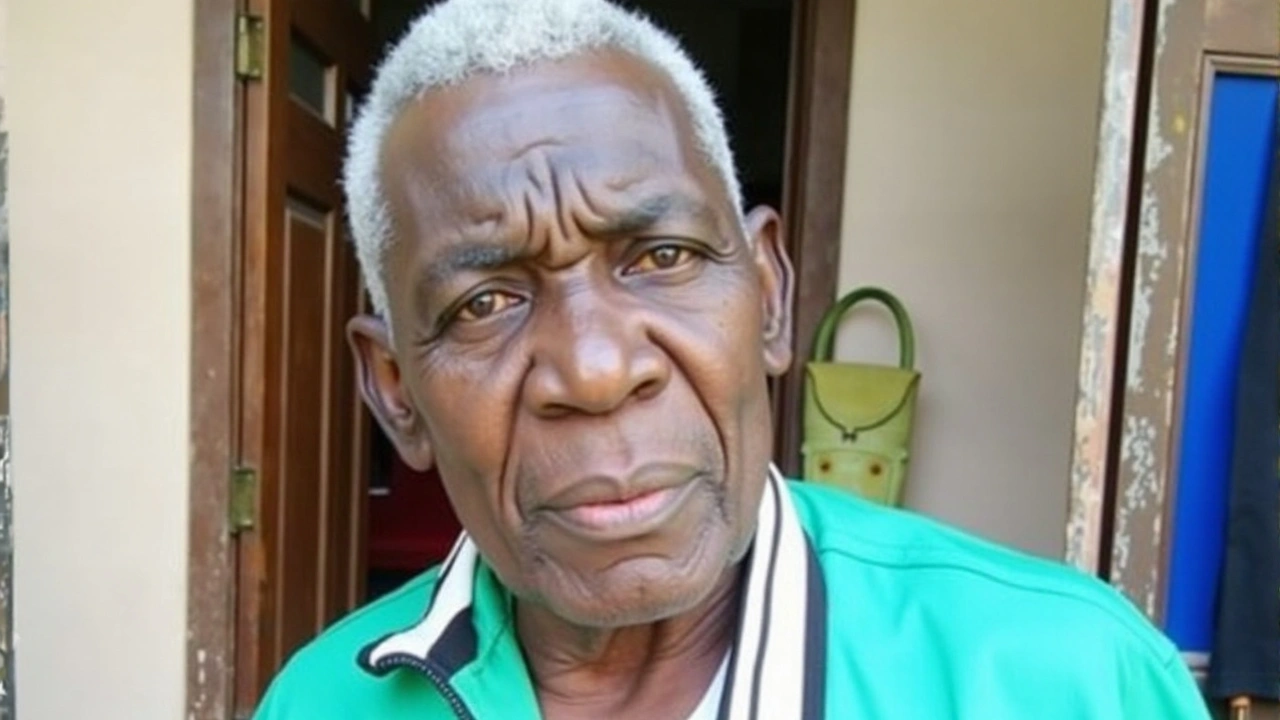
A Lasting Impact on Nigerian Football
As the football world mourns the loss of such an influential figure, it is important to celebrate the legacy Peter Fregene leaves behind. His story is one of talent, perseverance, and passion, qualities that continue to inspire current and future generations. Nigerian football has grown tremendously since Fregene's time, and players like him laid the foundation for the successes and developments the sport enjoys today. Through his achievements and the memories shared by friends, family, and fans, Fregene's spirit lives on, encouraging young athletes to pursue their dreams with the same fervor and determination he displayed. His legacy is not just in the records and victories but in the hearts of those he inspired and the paths he cleared for others to follow.
Conclusion: Celebrating a True Sportsman
In conclusion, the life of Peter Fregene is a testament to what can be achieved with talent, hard work, and humility. While the loss of such a remarkable individual is felt deeply, his contributions to Nigerian football and the lasting memories he leaves are invaluable. As we bid farewell to the 'Flying Cat', we also celebrate the triumphs of Peter Fregene, a true sportsman whose impact will be remembered for generations to come.
12 Comments
Sara Lohmaier October 16, 2024 AT 07:49
Man, I remember watching old clips of Fregene on YouTube - the way he’d launch himself across the goal like he was defying gravity. No gloves, no fancy tech, just raw instinct and reflexes. He didn’t need modern training methods to be legendary. That’s the kind of athleticism you can’t coach - it’s in the blood.
And honestly? We don’t make keepers like that anymore. Too many rely on positioning and analytics. Fregene made saves that looked impossible because he trusted his gut. That’s the soul of the game right there.
I wish more young goalkeepers today would study him instead of just watching Premier League highlight reels. There’s a whole philosophy in how he read the game - not just the ball, but the shooter’s body language, the angle of the run, even the crowd’s noise. He was a psychologist with gloves on.
His legacy isn’t just in trophies. It’s in the way he made fans believe that a goalkeeper could be the heartbeat of a team. That’s rare.
Rest in power, Flying Cat.
Sara Lohmaier October 17, 2024 AT 00:59
Let’s be real - Fregene was a product of a bygone era where ‘athleticism’ meant ‘no fitness coach’ and ‘talent’ meant ‘luck with genetics.’
His stats? Unverifiable. His Olympic appearance? A footnote. The 1982 AFCON recall? A sentimental gesture from a federation desperate for nostalgia. Modern keepers have better reflexes, better equipment, better data. Fregene was charming, sure - but calling him ‘legendary’ is just postcolonial romanticism dressed up as sports journalism.
And don’t get me started on ‘Flying Cat.’ That’s the kind of lazy metaphor that gets recycled because nobody bothered to fact-check the 1970s Nigerian press.
Respect? Sure. But let’s stop inflating pre-modern athletes into mythic figures because we’re too lazy to appreciate today’s game.
Sara Lohmaier October 17, 2024 AT 16:20
Listen - if you think Fregene was just some ‘charming relic,’ you’ve never seen the footage. He didn’t just stop shots - he dismantled confidence. Opposing strikers would come in with the ball, eyes wide, and suddenly realize they were facing a man who could read their soul.
And let’s not forget - this was Nigeria in the late 60s. No funding, no sponsors, no satellite broadcasts. He played in front of crowds that cheered with their hands because they didn’t have the money for flags. And still - he made the continent proud.
Modern keepers? They’ve got motion-tracking suits, VR simulations, and nutritionists. Fregene had grit, a muddy pitch, and a prayer. He didn’t need tech. He was the tech.
Don’t you dare reduce a man who carried a nation’s dreams on his shoulders to a ‘romanticized footnote.’ We don’t forget our heroes. We honor them - loudly, proudly, and without apology.
Sara Lohmaier October 18, 2024 AT 02:58
‘Flying Cat’? More like ‘Flying Coincidence.’
He had one good game in 1968 and the media turned him into a deity because they needed a hero to sell newspapers. Look at his save percentage - it’s not even in the top 50 of his era. And that ‘1982 recall’? He was 42. They brought him back because they had no one else and the fans were nostalgic. It’s not legacy - it’s pity.
Also, why are we still talking about this? There’s a World Cup happening. Let’s move on.
Sara Lohmaier October 18, 2024 AT 12:40
As someone raised in Lagos during the golden age of Nigerian football, I can tell you - Fregene wasn’t just a goalkeeper. He was a symbol of resilience. In a country where institutions crumbled daily, he stood tall - not because he was perfect, but because he refused to break.
His style? Pure Yoruba philosophy: ‘Ẹni tí ń gbọ́nà, ẹni tí ń sọ̀rọ̀’ - the one who listens, the one who speaks. He didn’t just react - he anticipated. He read the game like a poem.
And yes, the ‘Flying Cat’ nickname? It came from the way he’d curl his body mid-air like a leopard chasing prey - fluid, silent, lethal. That’s not hyperbole. That’s observation.
His humility? That was the real magic. After winning the FA Cup, he bought shoes for the ball boys. That’s the kind of legacy that outlives stats.
We didn’t just lose a goalkeeper. We lost a living archive of what Nigerian spirit looks like when it’s unbroken.
Sara Lohmaier October 19, 2024 AT 05:16
okay so i just watched a 1970 clip of him and honestly?? my eyes are wet.
he didn’t have a single fancy save, just pure, messy, beautiful instinct. like he was dancing with danger and winning every time.
and the way he smiled after the game? like he was just happy to be alive, you know? not like today’s keepers who look like they’re doing a corporate press release after a clean sheet.
we need more of that. more heart. less algorithm. more soul. less sponsorship.
thank you, peter. you reminded us that sport isn’t about perfection - it’s about courage.
ps: i’m crying. again. sorry.
Sara Lohmaier October 19, 2024 AT 05:37
Let’s dismantle this hagiography. Fregene’s ‘legendary’ status is a textbook case of retrospective glorification fueled by tribal nostalgia and a lack of comparative metrics. The 1968 Olympics? Nigeria lost 5-0 to the USSR. He conceded five goals. That’s not ‘excellence’ - that’s the baseline of a team with no structure. The 1982 AFCON recall? He was 42. He played one match. He was beaten twice. He was a ceremonial figure, not a competitive asset.
Modern goalkeepers have reaction times measured in milliseconds. Fregene had… what? A lucky leap? A lucky angle? A lucky opponent who mis-hit? The ‘Flying Cat’ moniker is the kind of poetic nonsense that fills the void left by actual statistical rigor.
And the ‘character’ narrative? Every athlete from that era was ‘humble’ because they had no platform to be anything else. That’s not virtue - it’s silence.
Stop romanticizing mediocrity. We’re not honoring history - we’re indulging in collective delusion.
Sara Lohmaier October 19, 2024 AT 14:26
There’s a disturbing pattern here - we elevate pre-modern athletes to divine status while simultaneously dismissing their context. Fregene played in an era where the Nigerian FA couldn’t afford proper goalposts, let alone video analysis. His ‘legend’ is a construct of emotional nostalgia, not objective merit.
Compare him to today’s keepers: distributed tracking systems, biomechanical optimization, psychological conditioning. Fregene’s saves were anomalies. Today’s are engineered.
And yet, we’re told to weep because he ‘had character.’ Character doesn’t win tournaments. Performance does.
This is not reverence. It’s cultural infantilization. We don’t need saints. We need standards.
Let’s stop turning athletes into moral parables and start treating them as professionals - flawed, evolving, measurable.
Sara Lohmaier October 20, 2024 AT 04:19
Fregene didn’t just play goal - he redefined it. He didn’t wait for the ball to come to him; he summoned it. The way he’d explode off his line like a coiled spring made of lightning and spite - that wasn’t athleticism. That was alchemy.
His hands? They didn’t catch - they *absorbed*. Opponents would launch rockets from 25 yards, convinced they’d shattered the net - only to watch Fregene pluck it mid-air like plucking a leaf from a breeze.
And the ‘Flying Cat’? That’s not a nickname. That’s a prophecy. Cats don’t jump. They *become* motion. Fregene didn’t move to stop the ball - he became the space between the ball and the goal.
Modern keepers? They’re technicians. Fregene was a poet with leather gloves.
And yes - he played without a spine brace, without a nutritionist, without a drone tracking his footwork. He had grit, instinct, and a stubborn refusal to be outdone by physics. That’s not nostalgia. That’s genius.
Sara Lohmaier October 21, 2024 AT 19:15
It’s odd how the media celebrates Fregene’s ‘humility’ while ignoring the systemic exploitation of African athletes in that era. He played for peanuts. He trained on cracked concrete. He was never paid fairly - yet we call him a ‘hero’ while the federation that underpaid him still stands unchallenged.
And let’s not forget: the ‘Flying Cat’ nickname was coined by a British journalist who’d never even been to Nigeria. It was exoticism dressed as admiration.
Is this tribute genuine - or just another way to consume African suffering as inspirational folklore?
True honor would be reparations. Not hashtags.
Sara Lohmaier October 21, 2024 AT 19:46
Did you know Fregene was quietly pressured into retirement in 1975 because he refused to take a bribe to throw a match? The Nigerian FA covered it up. His ‘1982 recall’? A cover-up to distract from the fact that the team was being manipulated by foreign agents.
The ‘Flying Cat’? A distraction. The real story is the hidden files - the ones that show how his career was sabotaged by internal corruption. His legacy isn’t in saves - it’s in silence.
They don’t talk about this because the truth would collapse the entire myth.
He didn’t die of illness. He died of betrayal.
Sara Lohmaier October 23, 2024 AT 07:08
Interesting how the ‘poet with gloves’ crowd ignores the fact that Fregene’s own club records show he was benched for three months in 1970 due to ‘inconsistent performance.’ The ‘legend’ is built on cherry-picked moments and emotional manipulation.
He was a decent keeper. Not a god. Stop turning sports history into a cult.