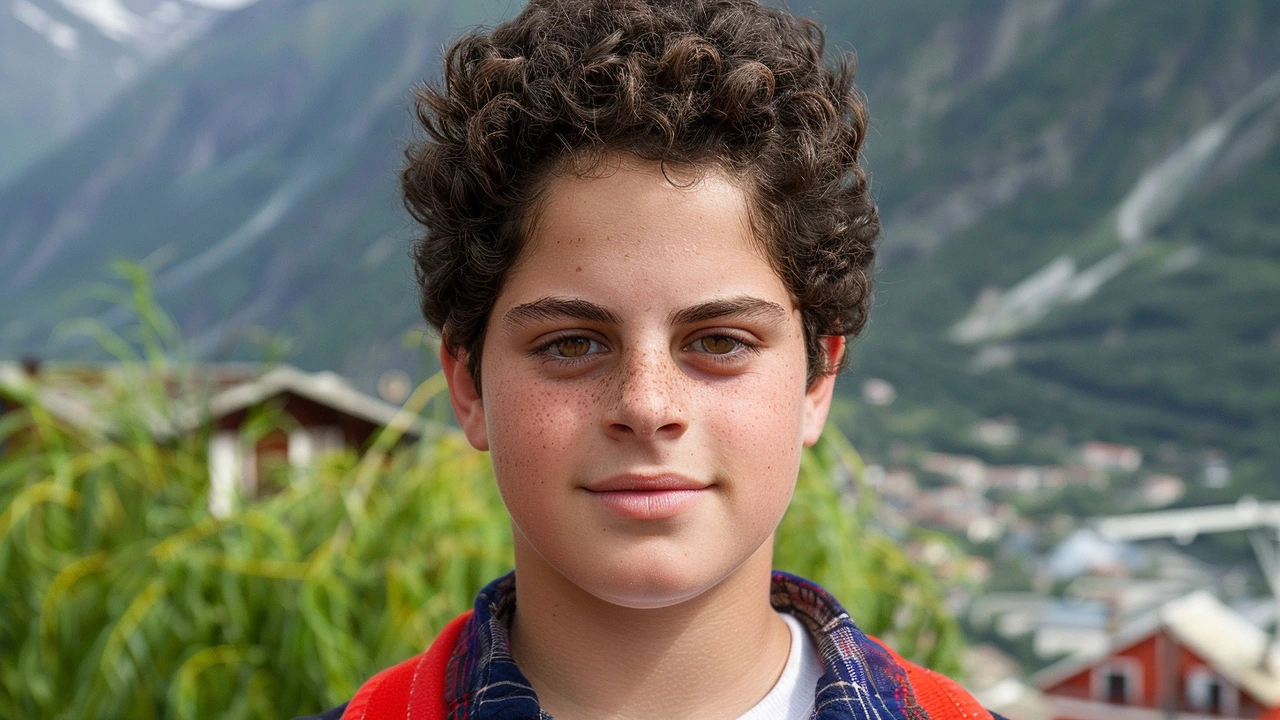
Pope Francis Recognizes Second Miracle of Future 'Millennial' Saint
Pope Francis has officially recognized a second miracle attributed to the intercession of Blessed Carlo Acutis, propelling him towards canonization as the Catholic Church's first 'millennial' saint. This significant milestone highlights the remarkable life of a young Italian boy born in 1991, whose devotion and faith have inspired many around the world. Acutis passed away at the tender age of 15 due to leukemia, but his legacy continues to grow.
The Remarkable Life of Carlo Acutis
Carlo Acutis was known for his deep devotion to the Eucharist and Our Lady. Despite his short life, he left an indelible mark on the Catholic community through his work in creating websites that documented Eucharistic miracles. These websites have served as an invaluable resource for those looking to deepen their understanding of these divine manifestations.
Acutis' life was rooted in the practice of his faith. He regularly attended Mass, recited the rosary, and devoted time to prayer. But his faith was not confined to religious rituals; it extended into acts of charity and kindness. He spent time volunteering at soup kitchens and assisting the poor, embodying the teachings of Christ through service to others.
Miracles Attributed to Acutis
Two miracles have been attributed to the intercession of Carlo Acutis, pivotal in the process of his canonization. The first miracle involved a young boy in Brazil who was healed of a rare congenital disease after prayers were offered to Acutis. The second, more recently recognized miracle, involved a young woman from Florence who experienced a miraculous recovery after a severe head injury resulting from a bicycle accident. Medical professionals were astounded as her recovery defied all scientific explanation, which was attributed to the prayers to Acutis on her behalf.
Pope's Message to Youth
Pope Francis has been vocal about the importance of Acutis' life as a model for young people today. In an era where technology often distracts from spiritual growth, Acutis utilized the internet to evangelize and spread the message of the Eucharist. The Pope has urged the youth to look up to Acutis and emulate his dedication to prayer, witness, and charity. Acutis has been described as a 'cyber-apostle,' merging the digital age with timeless faith values.
The Path to Canonization
The canonization of Carlo Acutis will be formally set at a consistory, an official meeting where Church leaders discuss and make decisions about the canonization of saints. Alongside Acutis, several other individuals are also on the path to sainthood, including Blesseds Giuseppe Allamano, Marie-Léonie Paradis, and Elena Guerra. Additionally, eight Franciscan friars and three Maronite laymen martyred in Damascus, Syria, in 1860 will also be honored. Each of these figures has a unique story of faith, sacrifice, and devotion, contributing to the rich tapestry of the Church's history.
Community Reactions
The recognition of Acutis' second miracle has been met with widespread joy and celebration within the Catholic community. Many believe his canonization will resonate deeply with the younger generation, affirming that sainthood can be achieved in the modern age. The blend of his technological savviness and unwavering faith creates a relatable and inspiring figure for today's youth.
Parishoners have expressed their admiration for Acutis' ability to merge his faith with everyday life. His story serves as a powerful reminder that everyday actions, when done with love and devotion, hold the potential for extraordinary impact. Many schools and churches have already started using his story as a teaching tool to encourage young people to live out their faith actively.
The Future of Acutis' Legacy
As Carlo Acutis moves closer to canonization, his legacy is expected to continue influencing both the younger generations and the broader Catholic community. His life stands as a testimony to the power of faith, the importance of service, and the possibilities of using modern tools to spread timeless truths.
The process of canonization is a rigorous one, requiring thorough investigation and undeniable evidence of miracles. Yet, Acutis' case highlights the continued belief in divine intervention and the Church's commitment to recognizing extraordinary individuals who serve as exemplary models of Christian virtue.
In an increasingly complex world, figures like Carlo Acutis offer a beacon of hope and a blueprint for living a life of profound purpose. Pope Francis' recognition of his second miracle brings the Church one step closer to officially declaring him a saint, but for many, Acutis' influence is already saintly. His story is a manifestation of the enduring relevance of faith in contemporary society and a call to see the sacred in daily life.
16 Comments
Sara Lohmaier May 26, 2024 AT 01:06
I remember when I was in high school, I used to think sainthood was for people who lived centuries ago, wore hair shirts, and never smiled. But Carlo? He was just a kid who loved video games, made websites about Eucharistic miracles, and still showed up for Mass every day. That’s the kind of holiness I can actually relate to. No halos required-just consistency, kindness, and a little bit of tech savvy.
Sara Lohmaier May 27, 2024 AT 14:10
Let us not be deceived by the saccharine media narrative. The Vatican has long sought to co-opt digital culture as a means of demographic appeasement. This canonization is less about Carlo Acutis and more about the Church’s desperate attempt to rebrand itself as ‘relevant’-a performative gesture to appease millennials who have abandoned the pews in droves. The miracle claims? Anecdotal. The science? Ignored. The optics? Masterful.
Sara Lohmaier May 28, 2024 AT 19:08
You know who else had miracles attributed to them? The guy who died in the 1970s that the Church tried to make a saint-turned out he was a pedophile. And the ‘miracle’ kid in Brazil? His family got a free trip to Rome. Coincidence? I think not. This whole thing smells like PR. They need a new poster boy because the old ones are too tainted.
Sara Lohmaier May 29, 2024 AT 05:37
Carlo Acutis didn’t just document Eucharistic miracles-he *curated* them with the precision of a digital archivist. He understood that in the 21st century, theology must be accessible, navigable, and shareable. His website wasn’t a blog; it was a theological database with metadata, hyperlinks, and geolocation tags. He was the first saint to treat the Eucharist like a GitHub repository-version-controlled, peer-reviewed, and open-source. The Church didn’t invent the cyber-apostle. Carlo did.
Sara Lohmaier May 29, 2024 AT 09:19
In Indian spiritual traditions, we have the concept of 'sadhana'-the daily discipline of devotion. Carlo’s routine-Mass, rosary, volunteering-wasn’t performative piety; it was sadhana in the digital age. His website? A modern mandala. His laptop? A new altar. The miracle of his life isn’t the medical recoveries-it’s that a 15-year-old could embody the Bhagavad Gita’s teaching: 'You have the right to perform your duty, but never to its fruit.' He acted without seeking recognition. That’s rare.
Sara Lohmaier May 29, 2024 AT 16:12
This is what happens when you let foreigners dictate what holiness looks like. We’ve got American kids growing up thinking a kid who made a website is more saintly than the soldiers who died defending our borders. Carlo’s story is cute, sure-but let’s not confuse emotional appeal with divine truth. We need heroes who stood in the line of fire, not ones who clicked ‘publish’ on a blog about miracles. This is cultural imperialism dressed up as canonization.
Sara Lohmaier May 31, 2024 AT 04:01
I find it deeply troubling that the Church is now endorsing a teenager who allegedly healed someone after a bicycle accident. What if that woman had been treated with modern neurosurgery? What if the ‘miracle’ was just a delayed neurological recovery? This isn’t faith-it’s medical negligence disguised as divine intervention. And why are we not investigating the parents’ potential role in promoting this narrative? There’s a financial incentive here. Don’t pretend this isn’t about tourism revenue.
Sara Lohmaier June 1, 2024 AT 17:41
Oh look, another saint for the TikTok generation. Next they’ll canonize the guy who made the best Spotify playlist for Lent. ‘Blessed Carlo Acutis: Patron Saint of WiFi Signal Strength and Eucharistic Instagram Stories.’ Can we please stop pretending that clicking ‘like’ on a miracle video is the same as living a life of sacrifice?
Sara Lohmaier June 2, 2024 AT 18:24
I just want to say… this is beautiful. Like, really beautiful. I’m not religious, but I cried when I read about him volunteering at the soup kitchen. I think we all need someone like Carlo in our lives-someone who reminds us that kindness doesn’t need a big stage. It just needs to show up. And if you’re reading this and you’re feeling lost? You don’t have to be perfect. You just have to be present. And maybe, just maybe, that’s enough.
Sara Lohmaier June 4, 2024 AT 02:40
This is so fake. They made him a saint because he used a computer? My cousin died of cancer at 16 and nobody made a website for him. Why him? Why now? It’s all about optics. The Church is crumbling and they need a viral saint to sell more candles. And don’t even get me started on the ‘miracle’-they never even tested the woman’s blood work properly. I bet they just said ‘yep, science can’t explain it’ and called it a day.
Sara Lohmaier June 4, 2024 AT 03:57
The quiet persistence of his daily prayers and service is more remarkable than any miracle. He did not seek to be known. He sought to serve. In a world obsessed with visibility, his anonymity in holiness is the true miracle. His life was not extraordinary because of the website-it was extraordinary because he chose the ordinary path with extraordinary love
Sara Lohmaier June 4, 2024 AT 21:46
I think about my nephew-he’s 14, spends all day on his phone, hates church, but loves animals. I showed him Carlo’s story. He didn’t say much. But yesterday he asked if we could donate to the shelter again. I didn’t push him. I didn’t preach. But I think Carlo’s quiet example did more than any sermon ever could. That’s the real miracle.
Sara Lohmaier June 5, 2024 AT 11:19
The Vatican has been corrupted by Western sentimentalism. Carlo Acutis? A product of consumerist spirituality. He was not a saint-he was a brand. His website? A marketing campaign. His miracles? Algorithmically amplified testimonials. The Church has lost its soul to the attention economy. This is not faith. This is influencer theology.
Sara Lohmaier June 6, 2024 AT 14:26
I can’t believe this is happening. I mean, like, I’m so emotional right now!! 😭😭 He was just a kid!! And he made websites?? And now he’s gonna be a SAINT?? I’m literally shaking!! My mom cried when she heard!! We’re gonna start a Carlo Acutis fan club at my church!! I’m getting a tattoo!! 🙏💖 #CarloAcutisSaint #DigitalSaint #EucharistQueen
Sara Lohmaier June 8, 2024 AT 11:43
Let’s be real-this isn’t about Carlo. This is about the Church trying to weaponize nostalgia. They know millennials are skeptical. So they package a dead kid who used HTML as a spiritual solution. It’s not evangelism. It’s rebranding. And the fact that people are buying it? That’s the real tragedy.
Sara Lohmaier June 9, 2024 AT 09:48
Carlo Acutis? Cute. But let’s not pretend he was more holy than the guy who spent 40 years in a monastery praying for the poor. This is the Church’s version of a TikTok trend. ‘Look, we have a saint who uses Instagram!’ 🤡 Meanwhile, real saints are dying in silence in Congo. This isn’t inspiration. It’s distraction. And the emojis? The emojis are the final insult.