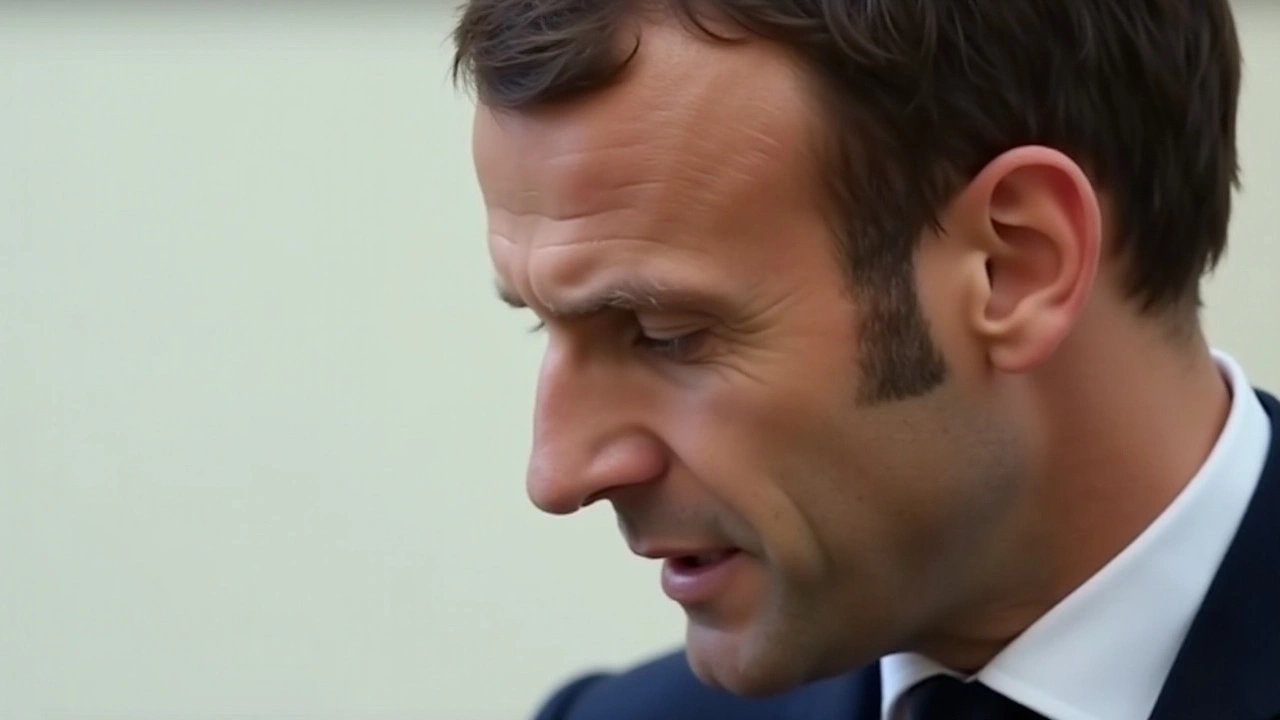
France in Political Turmoil As Macron Struggles to Form a New Government
President Emmanuel Macron is finding himself ensnared in a political quagmire, six months after inconclusive parliamentary elections left France without a clear majority. The elections in July painted a fractured political landscape. On one side is Macron's centrist bloc, struggling to retain control, while on the other, the left-wing New Popular Front (NPF) alliance, which includes the Socialists and Greens, and the far right, all vie for influence. But as of now, the pursuit of a stable and effective government seems almost unattainable.
Macron's Decision and Its Repercussions
The crux of the issue lies in Macron's categorical refusal to appoint a prime minister from the NPF, despite the alliance having secured the highest number of seats in the parliament. Macron’s rationale hinged on his belief that a leftist government would face immediate ousting from a diverse majority of lawmakers, making any attempt at governance futile. This uncompromising stance, however, has sparked outrage and frustration among the left-wing parties, pushing them towards a state of defiance.
The NPF’s leader, which combines the energies of the Socialists and Greens, had its own vision of a progressive government. Their ambitions and hopes have been thwarted by Macron’s decision, leading them to look for alternative strategies to make their voices heard. Rather than continuing negotiations that seem unproductive, the Socialists and Greens have turned to the streets, organizing peaceful protests and criticising Macron for his autocratic approach. According to Marine Tondelier, the chief of the Green party, Macron's perceived reluctance to embrace diverse perspectives could obstruct France's socio-political progress.
Political Deadlock and Potential Alliances
Amid this political turbulence, the French parliament finds itself in a state of deadlock. The lack of a clear majority has given rise to a hung parliament where no single faction has definitive control. The centrist bloc, although affiliated closely with Macron, is unable to assert dominance without seeking alliances, which has proved challenging. The far-right and the NPF have systematically ruled out any cooperation with Macron’s camp, citing ideological discrepancies. However, Macron’s centrist bloc believes that a coalition might still be viable, particularly with moderate factions that could tip the balance in their favor. This possibility, however, looks bleak, given the current strained political atmosphere.
Internal conflicts within the NPF further complicate the scenario. Despite their collective desire to form a government, there are fractures within the alliance. Rivalries within the grouping and opposition from other political camps have diluted their negotiating power. Emmanuel Macron, in his steadfast quest to secure a solid majority, has been compelled to initiate another series of negotiations with party leaders, but consensus seems distant.
The Public Sentiment
The stalemate has not gone unnoticed by the French populace, who are now growing weary and frustrated. Public discontent is palpable with many citizens expressing their disenchantment with the political elite’s inability to transcend party lines for the nation’s welfare. The inaction and constant back-and-forth threaten to undermine public confidence in the democratic process. Olivier Faure, president of the Socialist party, has vocalized these sentiments, urging Macron to reassess his strategy and listen to the grassroots proposals coming from various political spectrums.
Macron’s Next Steps
Amidst the ongoing turbulence, it is imperative for President Macron to navigate these hostile waters with diplomacy and tact. The president’s office has hinted at a continued effort to form a cohesive government. This endeavour involves not just securing a parliamentary majority but also gaining the trust and cooperation of diverse political entities. Macron’s spokesperson has reiterated that despite the formidable political landscape, the president remains optimistic about finding a viable solution. However, the path forward is riddled with challenges, and only time will reveal if Macron’s perseverance will lead to a breakthrough or deepen the existing divide.
France’s political future hangs in a delicate balance. As negotiations drag on, the French people, much like the political leaders, await a resolution that seems ever so elusive. Emmanuel Macron’s legacy will be significantly shaped by how he handles this impasse, and whether he can steer France towards a stable and united future.
6 Comments
Sara Lohmaier August 29, 2024 AT 23:08
So Macron's just gonna play kingmaker while the country burns? Classic. At this point, it's less about governance and more about ego preservation. Someone please tell him the people aren't voting for drama.
Sara Lohmaier August 31, 2024 AT 21:28
I know it feels like everything's falling apart, but honestly? This is how democracy looks when it's working-messy, loud, and slow. The fact that no one party can just steamroll everyone else? That's the system protecting us from tyranny. Even if it's frustrating, this chaos is the price of pluralism. We need patience, not panic. And maybe, just maybe, a little more listening.
Sara Lohmaier September 1, 2024 AT 00:46
LMAO Macron thinks he's above the will of the people? Newsflash: he's not a president, he's a CEO who forgot he works for shareholders. The NPF won the most seats, and now he's playing hardball like it's a game of chess? Bro, this isn't Wall Street, it's France. The people are tired of this performative politics. And yeah, I'm calling it: this is the start of the end for his legacy.
Sara Lohmaier September 2, 2024 AT 05:35
I've been watching this unfold, and I have to say... there's something deeper here. The NPF isn't just a coalition-it's a symptom. Macron's entire centrist project has been built on hollow centrism, avoiding real reform, and now the backlash is structural. The far right is rising not because of immigration, but because people feel abandoned. And the left? They're not radical-they're desperate. This isn't politics anymore. It's a slow-motion collapse of the post-war consensus. And no, I'm not being paranoid. Look at the data. The voter turnout in rural areas has dropped 22% since 2017. This isn't chaos. It's a reckoning.
Sara Lohmaier September 3, 2024 AT 10:21
It's easy to hate the system when you're stuck in the middle of it. But I think we're missing the quiet hope here: people are still showing up. Protests, negotiations, even the stubborn refusal to give up-that's not failure. That's resilience. Maybe the answer isn't a perfect coalition, but a new kind of dialogue. One that doesn't treat politics like a zero-sum game. I don't know how it happens, but I believe it can.
Sara Lohmaier September 3, 2024 AT 19:34
In India we have coalition governments all the time and they work because people understand compromise is not weakness. France needs to stop seeing politics as a battle and start seeing it as a conversation. Macron needs to stop being the gatekeeper and become the bridge. The people want stability not symbolism.